Bookkeeping feels like it can wait. You’re focused on winning clients, building your team, and growing revenue. Recording transactions and organizing receipts feels like it sits several rungs below everything else competing for your attention.
Until tax filing season arrives and you’re scrambling to reconstruct months of transactions from incomplete records. Or a potential investor asks for your financials and you realize you can’t produce reliable numbers. Or you need bank financing and can’t provide the detailed statements the bank requires.
Poor bookkeeping doesn’t feel like a problem when you’re small. Until it suddenly is.
Good bookkeeping services in Singapore aren’t just about staying compliant. They give you financial visibility that helps you run your business better, move faster when opportunities arise, and avoid the expensive scrambles that catch up with businesses that let their records slide. Here are the bookkeeping basics every Singapore business should get right from day one, and why each one matters more than it might initially seem. Explore Savvilio’s bookkeeping and accounting services to see how we support Singapore businesses at every stage.
Why Singapore Bookkeeping Services Matter More Than You Think
IRAS requires Singapore companies to maintain proper accounting records that accurately explain transactions and the financial position of the business. These records must be kept for at least five years. This isn’t a guideline. It’s a legal requirement that applies from your first day of operations.
Beyond the legal requirement, good bookkeeping services in Singapore support better business decisions. When your records are accurate and current, you know your actual cash position, your real profitability, and where your money is going. When they’re not, you’re making decisions based on incomplete information, which is a bit like driving with a foggy windscreen.
The Core Bookkeeping Basics Every Singapore Business Needs
- Record transactions as they happen
The longer you wait to record a transaction, the harder it is to remember what it was for and which category it belongs in. What was that payment for? Which client does this invoice relate to? The answers are obvious in the moment and surprisingly murky three weeks later.
Set a regular schedule for recording transactions, whether that’s daily or weekly, and stick to it. Make it a routine rather than something that piles up until it becomes overwhelming. Many good accounting software tools let you capture expenses on the go, which makes this much easier.
- Keep and organize all supporting documentation
Every transaction needs supporting documentation. Sales invoices. Purchase receipts. Bank statements. Expense claims. These documents prove that transactions were legitimate business activities. During an IRAS audit, you need to produce documentation that supports your financial statements. A transaction without documentation creates problems even if it was entirely legitimate.
Organize your documentation systematically. Digital copies stored in a well-organized cloud folder are perfectly fine, and many bookkeeping services in Singapore will manage this for you as part of their service. Find a system that works and use it consistently from the start.
- Separate personal and business finances completely
This one seems obvious, but it’s one of the most common bookkeeping mistakes among early-stage founders. Mixing personal and business expenses creates a mess that’s time-consuming to untangle and can raise questions during tax assessments. Open a dedicated business bank account and use it exclusively for business transactions from day one.
The moment you incorporate a company in Singapore, that company is a separate legal entity from you as an individual. Its finances should be completely separate too.
- Categorize expenses accurately and consistently
Not all expenses are treated the same way for corporate income taxation purposes in Singapore. Some are fully deductible. Some are partially deductible. Some are not deductible at all. When you record expenses, assigning them to the right category matters not just for your own understanding but for accurate tax filing.
Common categories include staff costs, rental and utilities, professional fees, travel expenses, marketing and advertising, and equipment and software. Your accountancy and bookkeeping services provider will set up a chart of accounts appropriate for your business type and help you categorize transactions correctly.
- Reconcile your bank accounts every month
Bank reconciliation means comparing your bookkeeping records against your bank statements to make sure they match. This catches errors, identifies missing transactions, and flags any unauthorized charges you might have missed. Monthly reconciliation is the minimum frequency. The longer you wait, the harder it becomes to identify and fix discrepancies.
Regular reconciliation also gives you confidence that your financial reports actually reflect reality, which is the point of maintaining bookkeeping records in the first place.
- Understand the difference between cash flow and profit
A business can be profitable on paper while struggling with cash flow, because clients haven’t paid invoices yet, or because money has been invested in inventory or equipment that hasn’t yet generated returns. Tracking both profit and cash flow gives you a complete picture of your financial health.
Good bookkeeping services in Singapore produce both a profit and loss statement and a cash flow summary. If you’re only looking at one of these, you’re missing half the picture.
- Use proper software rather than spreadsheets
Spreadsheets work for very small businesses with minimal transactions. But as your business grows, spreadsheets become error-prone, time-consuming, and difficult to maintain accurately. Proper accounting software doesn’t need to be expensive, and the time savings alone more than justify the cost.
Implementing proper software early also means you don’t have to migrate historical data later, which is tedious and prone to errors. Your Singapore bookkeeping services provider will typically have experience with multiple platforms and can recommend what suits your business scale and complexity.
How Bookkeeping Connects to Your Company Tax Filing in Singapore
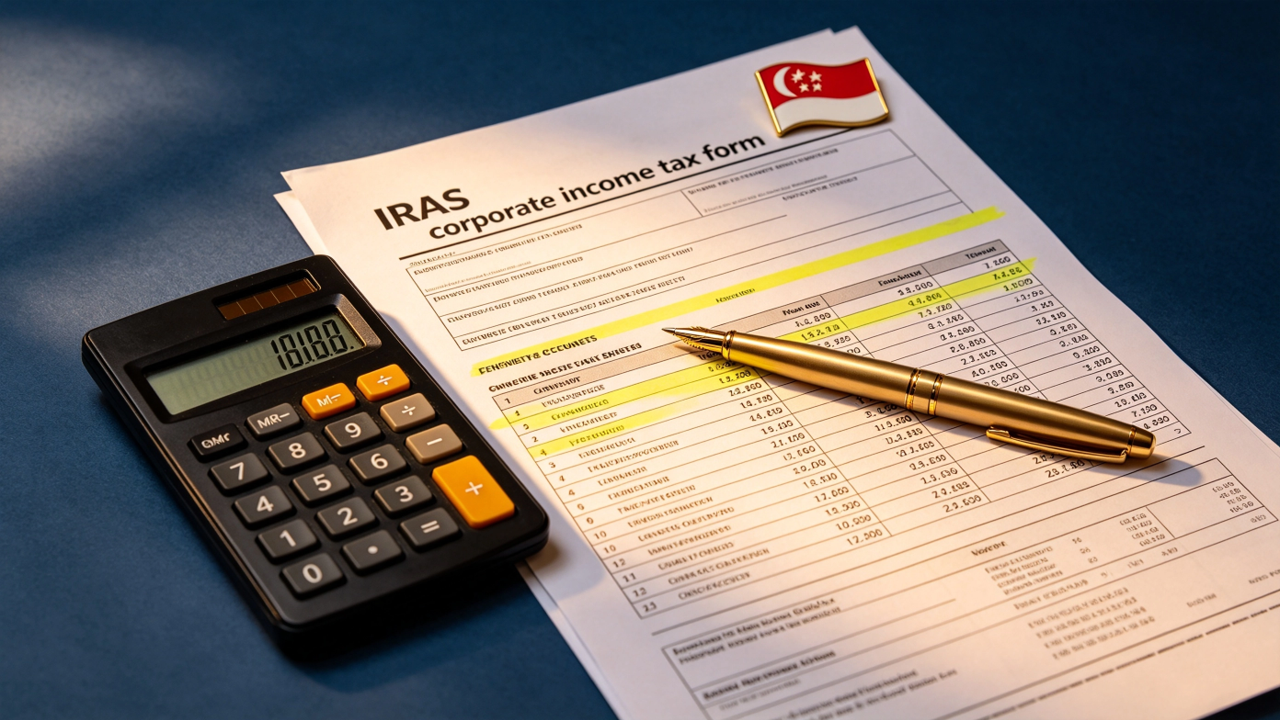
Your company tax filing in Singapore is only as accurate as the bookkeeping records it’s based on. IRAS requires companies to file an Estimated Chargeable Income within three months of their financial year end, and to submit their annual tax return by 30 November each year. Both of these filings draw directly from your accounting records.
Companies with clean, accurate books can prepare their tax returns quickly and confidently. Companies with incomplete or disorganized records spend disproportionate time and money on their tax filings, often working with accountants to reconstruct transactions that should have been recorded months earlier.
A good tax advisor in Singapore working alongside your bookkeeping provider also ensures you’re claiming all the deductions you’re entitled to. Common missed deductions include startup costs incurred before incorporation, capital allowances on business equipment, and certain pre-commencement expenses. You can only claim what your records support.
Financial Accounting Advisory Services: When to Get Help
Many founders start with DIY bookkeeping and then engage professional bookkeeping and accounting services in Singapore as complexity increases. That’s a reasonable approach. But there are some situations where getting professional help earlier pays off significantly.
Consider engaging financial accounting advisory services sooner if you’re a foreign-owned company with cross-border transactions, if you have multiple revenue streams or complex expense structures, if you’re planning to raise investment and need investor-grade financial statements, if you’re approaching the GST registration threshold, or if you’re simply not confident that your current records are accurate and complete.
The cost of proper accountancy and bookkeeping services is almost always lower than the cost of fixing problems created by inadequate records. Reconstructing six months of transactions, dealing with IRAS queries, or explaining gaps to potential investors are all significantly more expensive in time and money than maintaining good records from the start.
Can You Recommend Tax Advisory Services for Corporate Income Tax in Singapore?
For Singapore companies looking for integrated support that covers both bookkeeping and corporate income taxation, the most effective arrangement is a provider who handles both. When your bookkeeping provider and your tax advisor are working from the same records, there’s less risk of discrepancies, errors, and missed opportunities.
Look for a provider with clear experience in Singapore corporate tax, transparent pricing, proactive communication about filing deadlines, and the ability to prepare both your management accounts and your IRAS tax returns in an integrated way.
Frequently Asked Questions
Is bookkeeping legally required in Singapore?
Yes. Singapore companies are legally required to maintain proper accounting records that accurately explain transactions and the company’s financial position. These records must be kept for at least five years. Failure to maintain adequate records is a breach of the Companies Act.
What’s the difference between bookkeeping and accounting?
Bookkeeping is the process of recording and organizing financial transactions on a day-to-day basis. Accounting involves analyzing those records, preparing financial statements, and using the data for tax filing, financial planning, and strategic decision-making. Good bookkeeping services in Singapore typically include both functions for small and medium businesses.
How much do bookkeeping services in Singapore cost?
Costs vary depending on the volume of transactions, the complexity of the business, and the scope of services included. Basic bookkeeping and accounting services for a small Singapore company might start from a few hundred dollars per month. More comprehensive financial accounting advisory services for larger or more complex businesses will cost more. The key is finding a provider whose scope and price match your actual needs.
Can I do my own bookkeeping in Singapore?
Yes, especially in the very early stages with low transaction volumes. Many founders use accounting software to manage their own books initially. As complexity increases, most businesses find it more efficient and reliable to engage professional Singapore bookkeeping services.
What records do I need to keep for IRAS?
IRAS requires you to keep source documents that support your income and expense claims. This includes sales invoices, purchase receipts, bank statements, contracts, and payroll records. All records must be kept for a minimum of five years from the end of the relevant financial year.
When should I start bookkeeping for my Singapore company?
From day one. The moment your company is incorporated, you should have a system for recording transactions. Starting properly from the beginning is much easier than trying to set up a system retroactively with months of incomplete records to work through.
Looking for reliable bookkeeping services in Singapore to keep your financial records clean and your tax filings accurate? Savvilio’s bookkeeping and accounting services support Singapore businesses from incorporation through growth. Get in touch to find out how we can help.
This article provides general information only and does not constitute accounting, tax, or professional advice. Requirements may change. Please consult a qualified professional for advice specific to your situation.